
Karnak Temple in Luxor: History, Highlights & Visit Guide
Karnak Temple is one of Luxor’s most compelling places to explore ancient Egypt’s religious world. What visitors call “Karnak” is a complex of temples, courts, chapels and sacred spaces, shaped by successive rulers rather than created in one single moment. Its monumental columns are the famous first impression; the deeper reward is understanding how the different spaces connect.
This guide from New Belquis Tours introduces the history, the highlights and the practical choices that make an East Bank visit more rewarding.
Karnak Temple History: A Sacred Centre of Ancient Thebes
Karnak stands on the east bank of the Nile in modern Luxor, the ancient city of Thebes. It became a major centre for the worship of Amun. Generations of rulers added buildings, decoration and monuments, making the complex a record of changing royal ambition as well as religious practice.
This long development is one of the reasons to visit with a clear route. Ask how a particular court, gateway or columned space fits into the story, instead of assuming that everything you see was built by the same king. A few well-explained details can make the scale easier to understand.
The Great Hypostyle Hall: Karnak’s Forest of Columns
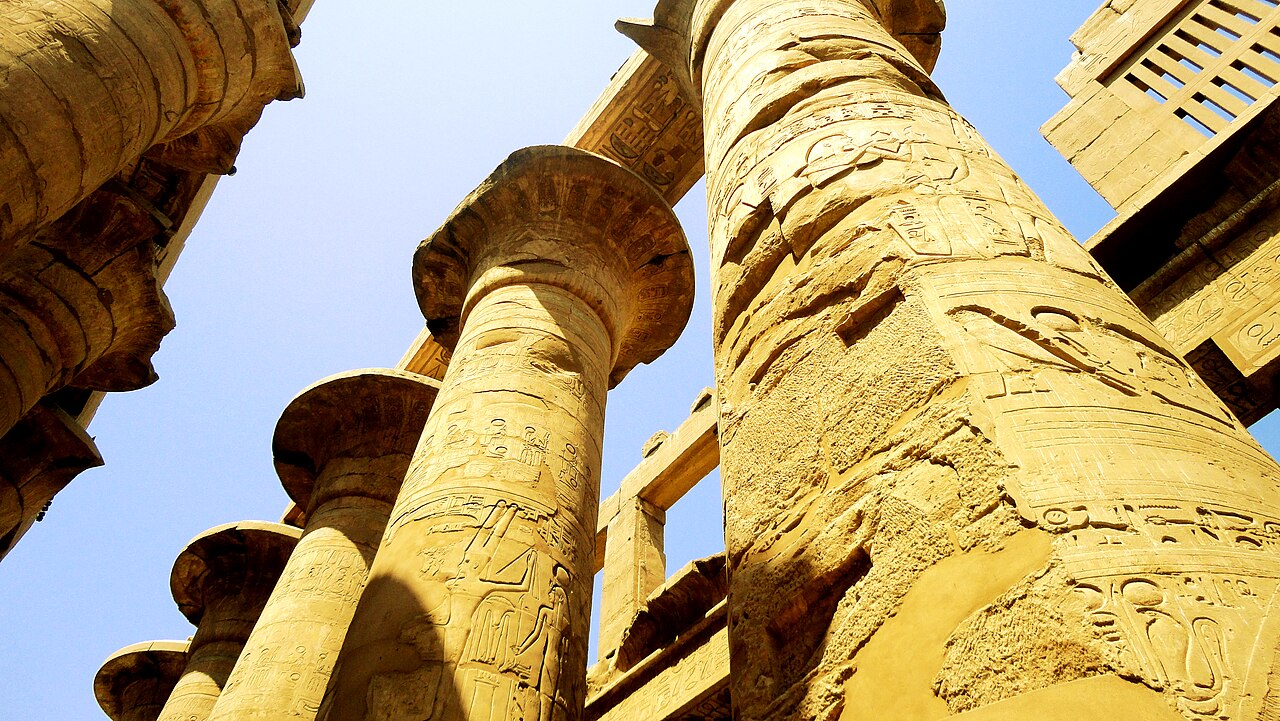
The Great Hypostyle Hall contains 134 sandstone columns. Its central group of twelve columns rises higher than the others, creating an elevated central aisle. The hall was principally built under Sety I, with important decoration completed under Ramesses II.
The columns evoke papyrus plants. Originally they helped support a roof, and high windows admitted light into the space below. The largely open appearance visitors encounter today is different from the more enclosed atmosphere of the ancient hall.
Stand still for a moment and look upwards, then choose one area of carving to examine closely. The experience becomes more memorable when you alternate between appreciating the whole space and noticing the details. Avoid touching the carved surfaces or moving beyond the designated route for a photograph.
More Karnak Highlights to Include
Obelisks and Royal Building Projects
The surviving obelisks, including the great monument erected by Hatshepsut, provide another way to think about royal presence at Karnak. Ask your guide to explain what an obelisk represented and how its setting relates to the surrounding structures.
The Sacred Lake
The sacred lake was connected with the purification rituals of the temple’s priests. It introduces a different aspect of the complex, encouraging you to imagine the routines and preparations that supported religious ceremonies.
Courts, Gateways and Smaller Spaces
Do not let the most famous hall become your entire visit. Follow the open visitor route through other spaces and pay attention to the transitions between them. Discuss any particular monument you want to see before arranging your tour, because access to individual areas can vary.
Karnak, Luxor Temple and the Opet Festival
Karnak and Luxor Temple were connected by a processional route lined with sphinxes. The relationship formed part of the Opet Festival, when divine images travelled between the sacred centres.
Visiting both helps turn two sightseeing stops into one connected historical story. Karnak offers the experience of an extensive religious complex; Luxor Temple gives you another setting in which to understand royal ceremony and the movement of a festival through ancient Thebes.
Both belong to the wider heritage of Ancient Thebes with its Necropolis, inscribed on UNESCO’s World Heritage List in 1979. Consider the temples alongside the wider landscape when planning your time in Luxor.
How to Plan Your Karnak Temple Visit
As a planning suggestion, allow a substantial sightseeing session rather than a rushed stop. The right duration depends on the depth of explanation you want and which areas are open. Explain whether you prefer architectural highlights, detailed history or a relaxed introduction.
- Choose your time thoughtfully. Consider the weather and your comfort with walking in open areas when arranging your day.
- Prepare for the conditions. Carry water, wear suitable shoes and bring sun protection.
- Agree on priorities. Tell your guide which highlights matter most, rather than trying to include every possible area.
- Confirm admission. Check the current entry arrangements and whether any additional experience requires separate booking.
- Ask about access. Discuss steps, uneven surfaces and any mobility needs before finalising your route.
- Leave time to look. Build in pauses for the columns and reliefs instead of moving continuously from one photo to the next.
Combining Karnak with a Nile Journey
Karnak can form part of a wider Luxor stay or be considered alongside a cruise itinerary. Confirm how sightseeing fits your arrival, embarkation and departure arrangements, so the temple visit does not become squeezed between transfers.
Our Dahabiya vs Nile cruise guide helps you compare travel styles. The Abu Simbel guide offers another perspective on the monuments of Ramesses II, while our Egypt cultural experiences guide connects landmark visits with wider interests.
Karnak Temple: Frequently Asked Questions
Is Karnak the same as Luxor Temple?
No. They are separate sites on Luxor’s East Bank, historically linked by a processional avenue and religious celebrations.
How many columns are in the Great Hypostyle Hall?
The hall contains 134 columns. Twelve taller columns form its central aisle.
Was the whole complex built by Ramesses II?
No. Karnak developed through the contributions of many rulers across a long period.
Can I visit Karnak and Luxor Temple on the same day?
They can be planned together. Leave enough time for each site, breaks and transport, and confirm their current entry arrangements.
Explore Luxor with New Belquis Tours
Plan your Luxor sightseeing with New Belquis Tours. Share your dates, historical interests and preferred pace so Karnak can fit your Egypt journey. Explore more destination stories in our Egypt travel blog.