
Abu Simbel Sun Alignment: Dates, History & Visit Guide
The Abu Simbel sun alignment is celebrated at sunrise on 22 February and 22 October each year. Sunlight reaches the inner sanctuary of the Great Temple of Ramesses II, briefly illuminating three of its four seated statues. It is a striking reason to travel to southern Egypt, but the story of Abu Simbel reaches far beyond those two mornings.
Picture the scene: visitors wait outside the rock-cut temple while its deepest chamber remains dark. As the sun rises, light finds a path through the entrance and halls towards the sanctuary. Ancient architecture becomes part of a changing landscape of light. For travellers interested in Egyptian history, this is a remarkable meeting of royal ambition, sacred space and the movement of the sun.
This guide from New Belquis Tours explains the dates, the history of the temples and the practical decisions to make before planning a visit.
When Is the Abu Simbel Sun Alignment?
Egypt’s Ministry of Tourism and Antiquities identifies 22 February and 22 October as the two annual dates of the celebrated solar alignment. Plan for an early-morning experience: the effect happens around sunrise, rather than at midday.
| Annual date | What to plan for |
|---|---|
| 22 February | A sunrise visit to the Great Temple; confirm special entry arrangements before travelling. |
| 22 October | The second annual celebration; organise accommodation and transport in advance. |
Use these dates to choose your travel window, then confirm the local sunrise time, ticket arrangements and access instructions for the year you are visiting. A calendar date alone does not guarantee an uninterrupted view inside the sanctuary. Weather, visitor numbers and the management of the site can affect the experience.
How Does Sunlight Reach the Sanctuary?
The phenomenon takes place inside the Great Temple of Ramesses II. At the relevant sunrise angle, a beam enters the temple and travels through its halls towards the inner chamber. The orientation of the building allows the rising sun to reach a space that usually feels far removed from the brightness outside.
The sanctuary contains statues of Amun-Ra, Ra-Horakhty, the deified Ramesses II and Ptah. During the celebrated alignment, the first three receive the light, while Ptah remains in shadow. The Ministry of Tourism and Antiquities connects that shadow with Ptah’s association with the underworld.
This helps explain why the event feels so powerful. It is not simply sunshine falling on a temple façade: light reaches a sacred interior and transforms the way its figures are seen. Looking at the sanctuary after learning this story gives the visit another dimension, even if your trip falls outside the festival dates.
Abu Simbel Temple History: Ramesses II and Nefertari
Abu Simbel stands in Nubia, near Egypt’s southern border. Its two rock-cut temples were commissioned by Ramesses II of the Nineteenth Dynasty during the thirteenth century BC, more than 3,000 years ago.
The Great Temple of Ramesses II
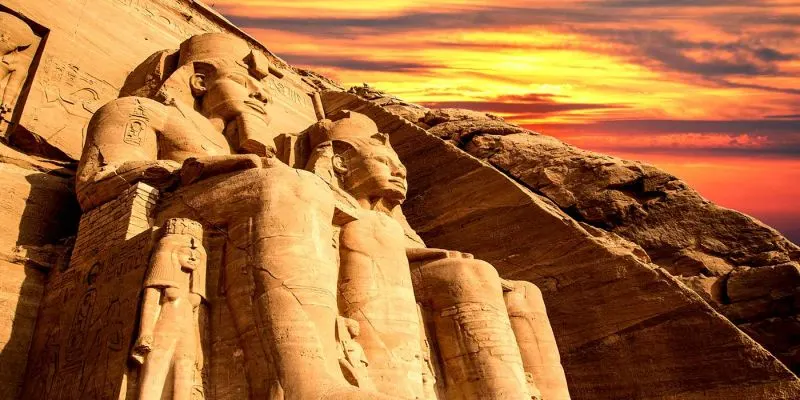
Four immense seated statues of the king dominate the entrance. Inside, royal images and monumental halls lead towards the sanctuary. The scale gives a sense of how the pharaoh wanted his kingship to be understood: imposing, sacred and enduring. Take time to look beyond the famous exterior and follow the architectural sequence into the temple.
The Small Temple of Nefertari and Hathor
The neighbouring Small Temple honours Queen Nefertari and the goddess Hathor. The queen’s figures on its façade are comparable in size to those of Ramesses II, an unusual and memorable feature. Visiting both temples helps you appreciate Abu Simbel as a complete historical site, rather than treating the Great Temple as the only stop.
If you enjoy understanding monuments through the people and traditions behind them, explore our guide to cultural experiences in Egypt for more ideas to build around your journey.
The Rescue of Abu Simbel: A Second Remarkable Story
The temples’ modern history is almost as compelling as their ancient origins. The creation of Lake Nasser following the construction of the Aswan High Dam threatened to submerge important Nubian monuments. An international campaign coordinated by UNESCO brought specialists together to save them.
At Abu Simbel, the temples were cut into numbered blocks, moved to higher ground and carefully rebuilt within an artificial cliff. UNESCO records that the new site was inaugurated on 22 September 1968. In 1979, Abu Simbel became part of the World Heritage property known as the Nubian Monuments from Abu Simbel to Philae.
Today, a visit brings together two achievements separated by millennia: the original creation of the rock-cut temples and the international effort that allowed future generations to see them.
Planning an Abu Simbel Visit from Aswan
Start by deciding whether your priority is the sun alignment celebration or a more flexible visit focused on the temples themselves. Both can be rewarding, but they call for different planning.
- Build the route around your main interest. Tell your travel planner if seeing the alignment is essential, so transport and accommodation can be considered together.
- Compare a day excursion with an overnight stay. Ask how each option affects your departure time, rest and opportunity to visit both temples.
- Confirm the full arrangements. Check meeting points, transfers, guiding, entry tickets and any special event procedures before finalising a booking.
- Leave room for both temples. Avoid planning your whole visit around a single photograph of the Great Temple.
- Prepare for an outdoor archaeological site. Bring water, sun protection and comfortable shoes; for a dawn visit, consider an extra layer.
- Follow the site team’s instructions. Respect barriers, photography rules and visitor movement inside the sanctuary.
If you are combining Abu Simbel with a river journey, make sure the excursion fits your embarkation and disembarkation arrangements. Our Dahabiya vs Nile cruise guide can help you think through the style of trip you prefer. For wider preparation, read our essential travel tips for exploring Egypt.
Abu Simbel Sun Alignment: Frequently Asked Questions
On which dates does the sun illuminate the sanctuary?
The celebrated annual dates are 22 February and 22 October. The event takes place around sunrise. Confirm the local arrangements for your chosen year before travelling.
Which temple has the sun alignment?
The famous illumination occurs in the sanctuary of the Great Temple of Ramesses II. The neighbouring temple of Nefertari and Hathor is a separate monument within the same site.
Why does the statue of Ptah stay in shadow?
Three of the four sanctuary statues receive sunlight during the celebrated alignment. Ptah remains in shadow, which the Ministry of Tourism and Antiquities relates to his association with the underworld.
Can I visit Abu Simbel outside February and October?
Yes. You can plan a visit outside the alignment dates to explore the architecture and history of both temples. Check current opening arrangements before setting out.
Was Abu Simbel moved from its original location?
Yes. The temples were relocated to protect them from the rising waters of Lake Nasser. Their new site opened in 1968, following a major international rescue effort.
Plan Your Abu Simbel Journey with New Belquis Tours
Whether you want to experience the sunrise celebration or explore Abu Simbel as part of a wider cultural holiday, plan your Egypt trip with New Belquis Tours. Share your preferred dates, pace and interests so the temples can fit naturally into your itinerary. Find more inspiration in our Egypt travel blog.
Historical Sources and Visitor Information
The historical details and alignment dates in this guide were checked against the following official sources. For current entry rules and event arrangements, consult the site authority before your visit.